
For the first time since the pandemic, the U.S. office market has reached a noticeable inflection point, entering a growth phase as demand turned positive in Q4 2025. Workplaces are regaining momentum as companies and employees more readily recognize the value of a centralized work setting for collaboration, mentorship, community and relationship-building. The market is gradually shifting from contraction to a measured recovery, primarily driven by strong demand for high-quality space, historically low construction pipelines, and increasing leasing activity driven by renewed tenant confidence.
Market fundamentals are showing early signs of stabilization. Nationwide net absorption reached over 2.5 million square feet in the last half of 2025, marking the strongest consecutive quarterly performance since before the pandemic. Vacancy rates have begun to trend downward as demand accelerated, with leasing activity surpassing 60 million square feet – one of the highest quarterly totals in the past five years. Sublease inventory is also tightening, declining 20% since 2024 as space is absorbed at a faster pace. At the same time, asking rents increased 2% across the second half of 2025, signaling improved pricing power for owner-operators.
Collectively, these indicators point to a market transitioning from correction to early-stage recovery. While momentum is building, performance remains uneven, with demand increasingly concentrated in healthy submarkets with high-quality assets.
Demand continues to concentrate in Class A assets, which are outperforming across absorption, leasing and rental growth. Leasing activity has grown 5.2% year-over-year since early 2022 and hit a post-pandemic high in Q4 2025, as more companies gain confidence in executing long-term real estate commitments. Most of the leasing activity, approximately 80% in 2025, was in Class A properties, underscoring a sustained flight to quality as tenants prioritize high-performing, amenitized environments.
Features such as on-site retail, dining and lifestyle offerings are reinforcing this trend, positioning these properties as differentiated, experience-led destinations. From an investment perspective, this concentration of demand highlights a growing bifurcation in the market, with capital and leasing activity increasingly favoring well-located, high-quality assets. Performance continues to concentrate in top-tier assets, with +9.2 million square feet in 2025. In contrast, weaker fundamentals remain largely isolated to markets with aging, lower-quality inventory. Supply constraints are reinforcing this dynamic, as new construction activity has declined to a 25-year low, limiting the availability of competitive space.
Utilization trends continue to highlight growing differentiation across asset classes. Class A buildings recorded 75% peak attendance in Q1 2026, compared to 55% for Class B and C properties, reflecting a clear tenant preference for high-performing environments. For investors, this divergence highlights the growing importance of asset quality, location and amenity profile in driving both occupancy and long-term value.
Located above the Ogilvie Transportation Center in Chicago’s West Loop, KBS’ Accenture Tower, illustrates how strategic repositioning can drive measurable performance. Spanning approximately 1.46 million square feet, the property is a defining presence in the downtown skyline. In 2021, KBS executed a strategic repositioning, investing more than $22 million to modernize the building, adding premier amenities, upgraded common areas, and 90,000 square feet of speculative (spec) office suites to further enhance its competitive market position. Today, the building is more than 90% leased, demonstrating the effectiveness of a quality-driven investment approach, although the renovations were planned prior to the pandemic and completed in 2021.
More broadly, best-in-class assets are not only quality investments for owners and tenants, but they often add significant value to the larger community by attracting quality businesses and encouraging investment in the surrounding neighborhood.
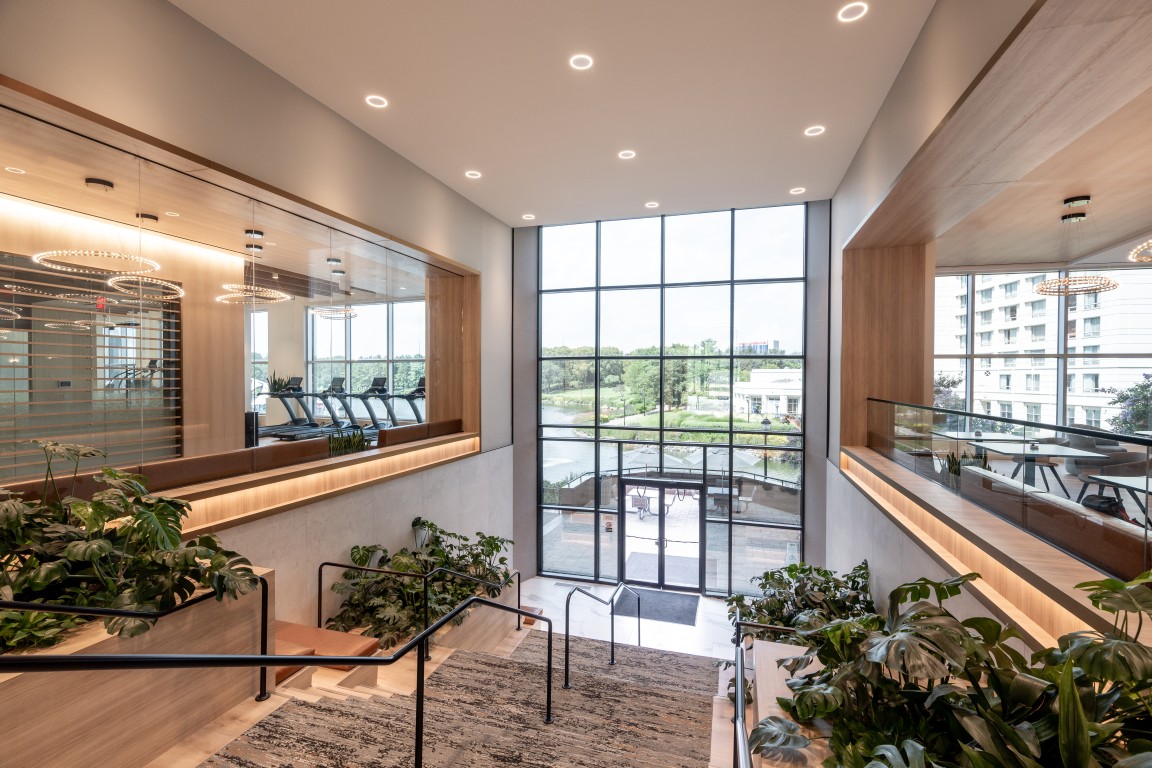
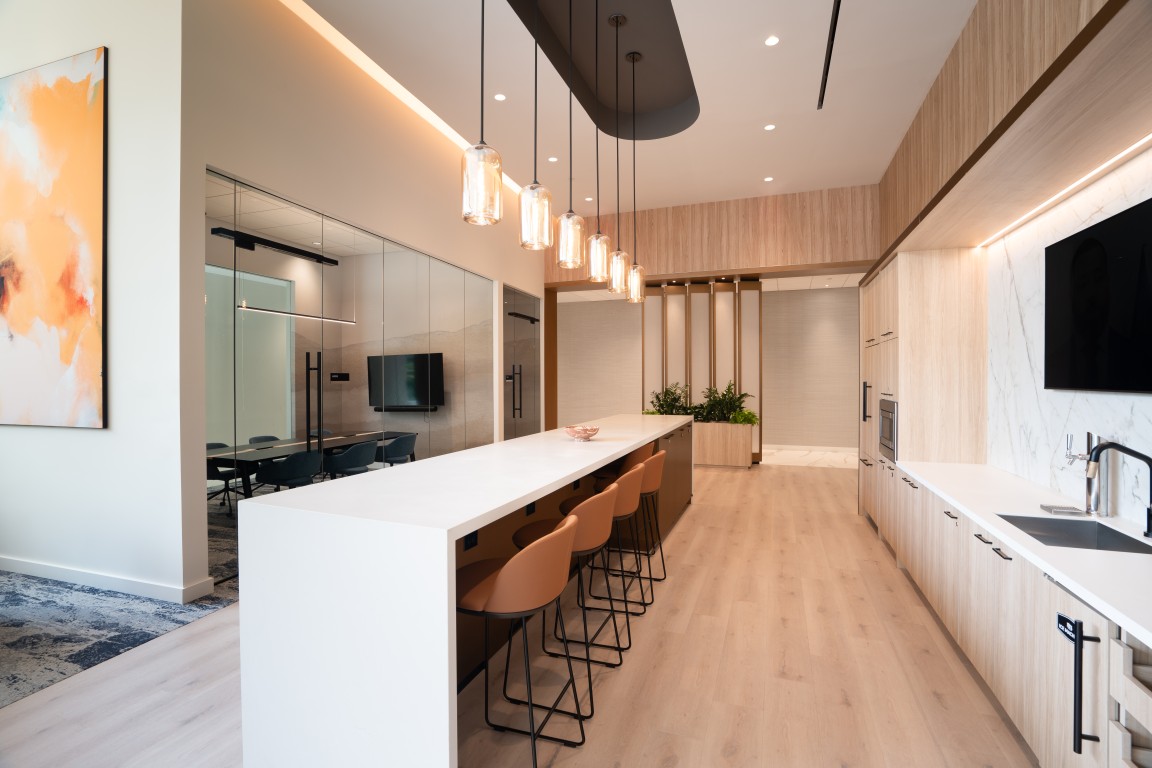
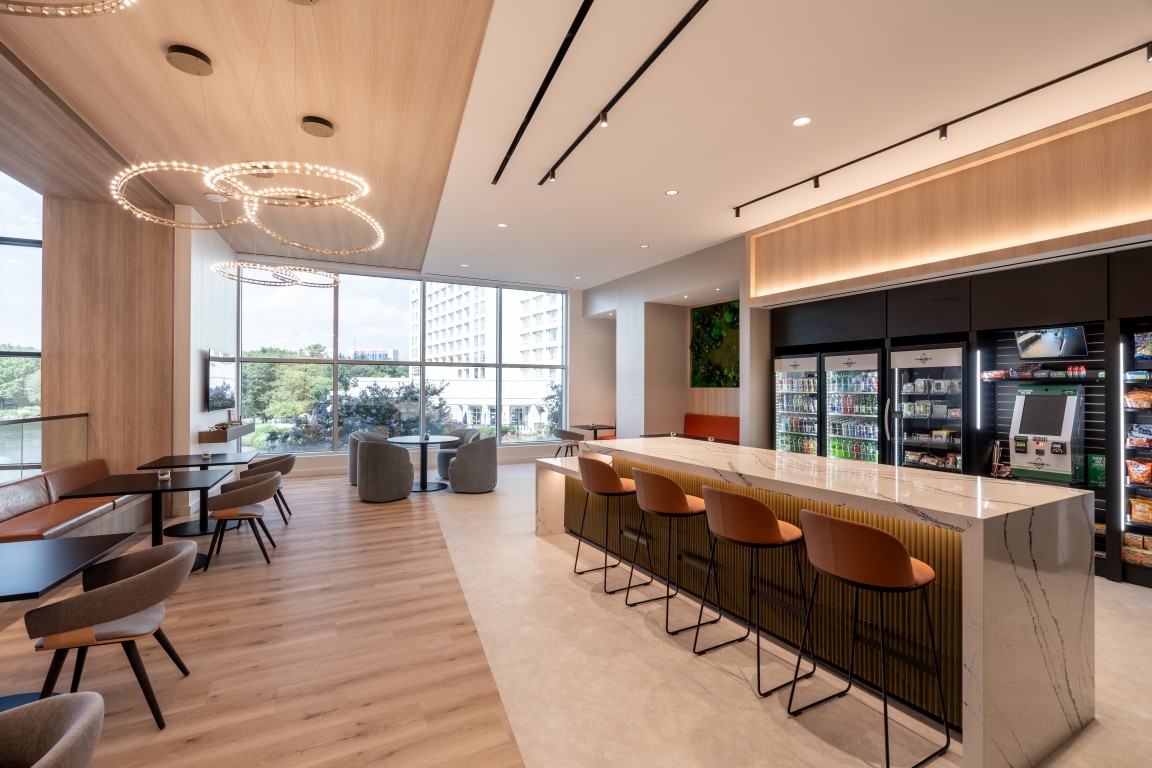
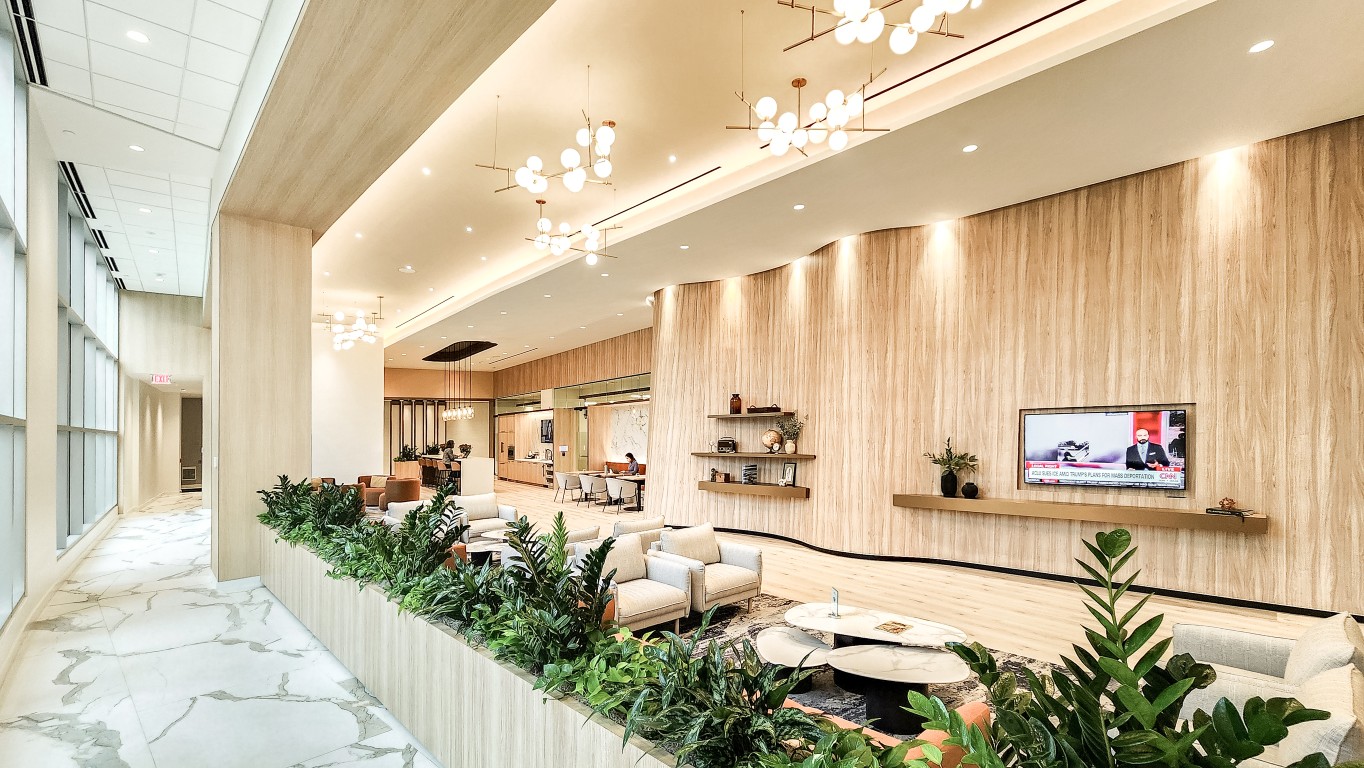
A similar repositioning strategy is evident at KBS’ Waterfront at Washingtonian in Gaithersburg, Maryland, which possesses two of the most defining property characteristics: location and views. The building is in the center of a dynamic mixed-use center featuring dining, entertainment, shopping and hotel options all within walking distance. Even more appealing, the property is located on a large lake with breathtaking outdoor views which can be enjoyed from every floor. However, the 1980s-constructed building lacked modern amenities, limiting its leasing potential in the competitive suburban Washington, D.C. market.
Please see the Gallery below to view images of Waterfront at Washingtonian.
After labor costs, real estate is the largest expenditure for most companies, so many have begun implementing advanced analytics to improve efficiency and performance. AI platforms can help aggregate data from sources such as access swipes, conference room bookings, Wi-Fi connections, desk reservations, and occupancy sensors to identify patterns in attendance, collaboration, and space utilization. This data-driven approach helps organizations to better align footprint and design with actual usage to better identify peak occupancy patterns, team-level attendance trends, underutilized areas and opportunities to enhance collaboration.
For owners and tenants alike, real-time data enables more informed real estate decision-making across several key areas:
In addition to assisting individual companies with critical real estate decisions, aggregated data analyzed over weeks, months and even years reveals valuable workplace trends as well as comparisons to pre-pandemic baselines. Many of today’s companies are utilizing data-driven analytics to achieve as much as a 40% to 50% cost reduction in their real estate costs.
Investment activity in the office sector continues to regain momentum, rising for seven consecutive quarters, and projected to reach approximately $560 billion in 2026, approaching pre-pandemic annual averages. Improving capital market conditions including moderating borrowing costs, and the return of both debt and equity are supporting renewed investor confidence and a measured increase in risk appetite, two of the key drivers for recovery. At the same time, distressed sales remain limited, as lenders are increasingly opting to extend or restructure loans rather than force asset dispositions.
However, capital is not being deployed evenly. Investor demand remains concentrated in Class A assets, specifically in key markets such as NYC, Boston, Phoenix, and Tampa, where scarcity is intensifying competition. This makes repositioning buildings important and already many investors are targeting these assets as high-return opportunities. In general, investment strategies are focused on markets with strong employment growth, limited pipeline activity and resilient fundamentals. As valuations realign, office investors are increasingly positioned to capitalize on acquisition opportunities and enhance shareholder value through disciplined deployment.
At NAREE’s 2026 conference in June, Matt Mowell, senior managing economist at CBRE, said CRE devaluations are behind us and office is expected to lead the valuation recovery in 2026, among all other sectors.
For the first time since the pandemic, market experts are observing 2026 and 2027 with measured optimism. The Commercial Real Estate Development Association (NAIOP) forecasts a gradual recovery with 50.5 million square feet of positive absorption by Q4 2026, and an additional 28.4 million square feet through Q3 2027. The office narrative has shifted from crisis management to operational discipline, with performance increasingly driven by execution rather than market tailwinds. Owners and investors that combine strategic conviction with data-informed decision-making are likely to be best positioned to capture value.